
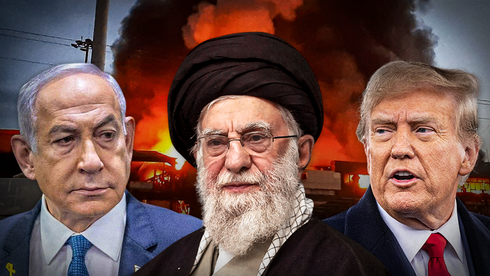
Tensions between the United States, Israel and Iran escalated sharply on Friday as waves of airstrikes pummeled several Iranian cities, while Tehran warned it is fully prepared to confront any potential US ground assault.
Iranian officials reported that more than 1,200 people have been killed since Saturday as US and Israeli forces intensified their campaign, striking military infrastructure, missile platforms and naval assets across the country.
Massive Military Offensive
The US Central Command (CENTCOM) announced that American forces have hit roughly 200 targets across Iran in the past 72 hours, including ballistic‑missile launch sites, naval installations, and major command centers.
US officials said B‑2 bombers deployed bunker‑buster munitions against fortified underground missile systems, while US naval units struck Iranian vessels operating in the Gulf. CENTCOM added that more than 30 Iranian ships had been destroyed—among them what it identified as a drone‑carrier vessel.
US Defense Secretary Pete Hegseth said Washington possesses the resources to sustain the operation indefinitely.
“Our munitions are full and our will is iron‑clad,” he said, noting that the United States will dictate the pace and duration of the conflict.
Tehran Warns of Broader Confrontation
Senior Iranian leaders signaled readiness for an expanded conflict.
Ali Larijani said Tehran is “ready and waiting” for any American ground incursion, while Foreign Minister Abbas Araghchi warned of heightened instability along Iran’s western border with Iraq.
Iran also accused Washington of fueling unrest by supporting Kurdish groups operating near the frontier.
Ongoing Missile and Drone Strikes
Iran’s Revolutionary Guard confirmed it had launched a coordinated missile‑and‑drone barrage targeting Tel Aviv and central Israel. The salvo included the Kheibar Shekan missile, equipped with cluster munitions designed to disperse submunitions over wide areas.
Footage circulating online showed multiple cluster detonations over central Israel, although no casualties were immediately reported.
Cluster munitions remain contentious internationally and are banned under global treaties—though neither Iran nor Israel is a signatory.
Regional Security Fears Mount
The conflict’s ripple effects are increasingly felt across the Gulf.
- Kuwait reported intercepting a missile that briefly entered its airspace.
- Bahrain activated emergency sirens and instructed residents to take shelter.
- The US Embassy in Kuwait has reportedly begun preparing evacuation plans.
Defense officials across the Gulf are also coordinating closely. Saudi Defence Minister Prince Khalid bin Salman and UAE Defence Minister Sheikh Hamdan bin Mohammed bin Rashid Al Maktoum discussed emerging threats and the rapidly evolving security landscape.
Strait of Hormuz Disruption Intensifies
Global energy markets have been rattled after Iran’s Revolutionary Guard declared the Strait of Hormuz closed. Major shipping companies have begun diverting vessels away from the critical chokepoint, which handles about 20 percent of the world’s oil shipments.
The disruption has sparked fears of severe supply shortages in global oil and gas markets.
Humanitarian Crisis Deepens
The United Nations refugee agency estimates more than 330,000 people have been displaced across the Middle East since the escalation. This includes:
- 100,000 fleeing Tehran
- 84,000 displaced in Lebanon
- 118,000 displaced across Afghanistan and Pakistan
Evacuation orders in Beirut’s southern suburbs have also driven thousands from their homes.
Political Shockwaves in Washington
In the United States, the conflict is triggering heated political debate.
The US House of Representatives voted 219–212 against a measure that would have required congressional authorization for continuing military engagement with Iran.
President Donald Trump said the US must play a role in shaping Iran’s future governance, calling the possible succession of Mojtaba Khamenei, son of the late Supreme Leader Ali Khamenei, “unacceptable.”
Air Travel Disruptions
Airlines across the region are adjusting routes as the conflict affects regional airspace.
Etihad Airways announced it will resume limited commercial operations from March 6 to March 19, connecting Abu Dhabi with key destinations including London, New York, Delhi, Paris and Moscow.






 United Arab Emirates Dirham Exchange Rate