
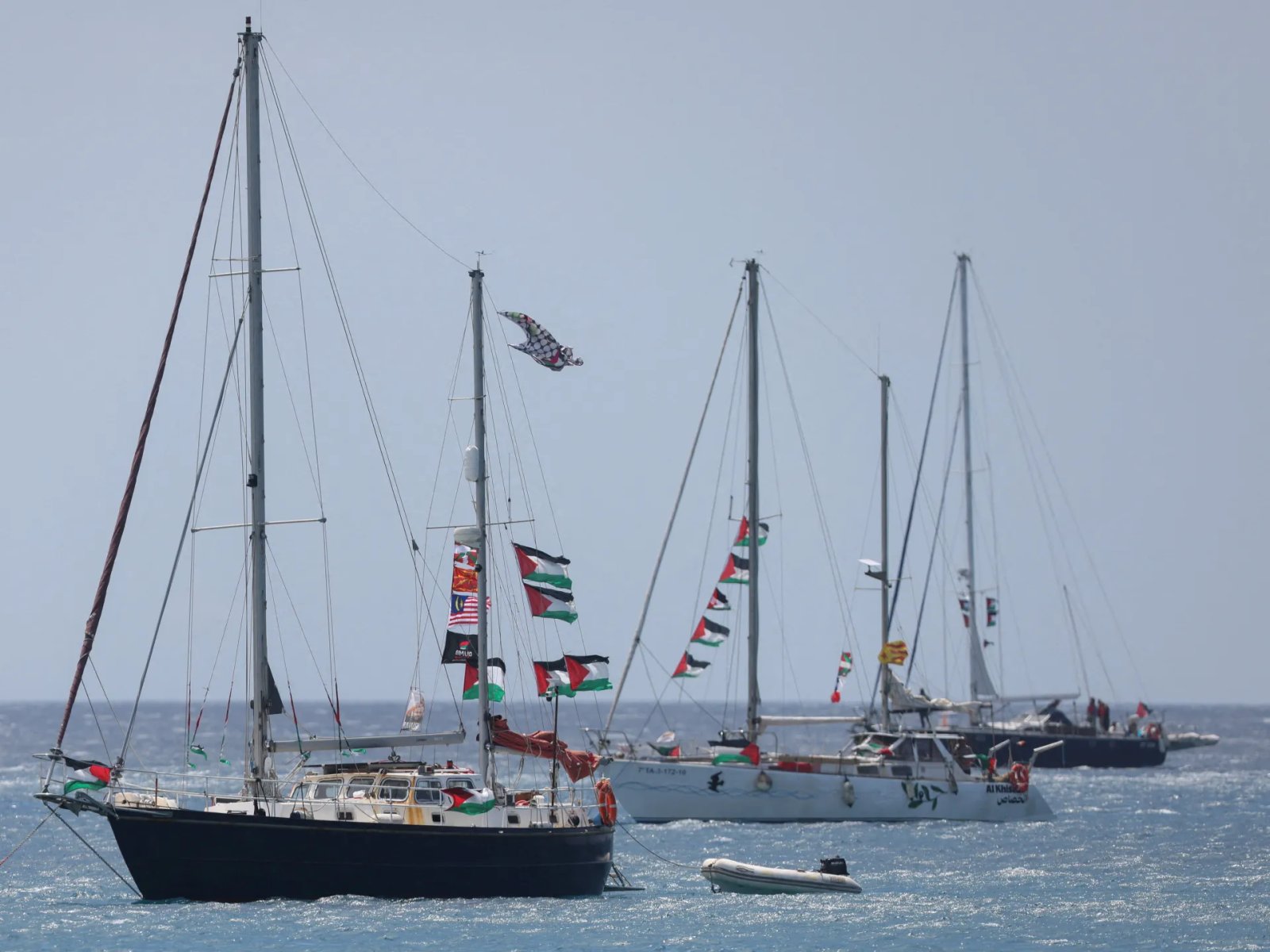
Imagine the following scenario: you are scheduled to board a sailing boat as part of a large fleet carrying humanitarian aid. Some boats in the fleet had already departed ahead of you, yet days before you are scheduled to join them, the boats are violently intercepted in international waters by a foreign power acting 600 nautical miles (1,100km) from its own coast in flagrant violation of international maritime laws.
At least 30 of your fellow sea travellers were injured, and at least four have since come forward to report incidents of sexual assault. Another two, Saif Abu Keshek and Thiago Ávila, were forcibly taken to Israel, where they faced terrorism charges and were beaten and tortured while in detention. Both undertook hunger strikes in protest until their release was announced.
Hand on heart, knowing all this, would you continue sailing? More so, would you expect the overwhelming majority of your fellow travellers to do so as well?
For the great majority of the remaining participants of the Global Sumud Flotilla (GSF) – those who have not been kidnapped at sea by the Israeli navy – the answers to these questions are clear: We are sailing on.
In defiance of Israel’s genocide, and in solidarity with the Palestinian people, our fleet is moving forward. Despite experiencing or being informed of the violent interception, we are en route to the Turkish port of Marmaris, where we will regroup. I am sailing on board one of the boats as I write this.
In their long history, Gaza flotillas have often been decried as performative, except, of course, they have yielded some very concrete results: back in October, despite being violently intercepted once again, the GSF mission contributed to the mounting pressure on Israel to accept a ceasefire, which was announced days after the violent interception.
The word “performative” should instead be applied to this “ceasefire”, during which the Israeli army has continued to massacre Palestinian men, women and children and deny them humanitarian aid in adequate quantities.
Each of our missions has helped further delegitimise the Israeli state’s genocidal and warmongering tactics. And this is true for this mission as well. Already, more than 600 nautical miles from Gaza’s shores and even before it had the opportunity to fully assemble, the flotilla managed to stir international debate when 22 of its vessels were targeted.
An array of geopolitical questions has arisen, and longstanding maritime sovereignty conventions have been challenged, evincing the violation of international law. Should the Greek coastguard not have responded to the distress signals issued within its search and rescue zone? Should they not have barred the Israeli naval prison-ship from leaving the Greek port of Ierapetra, Crete, given that they were already in possession of reports of the torture and beating of the international activists inside?






 United Arab Emirates Dirham Exchange Rate