• About
  • Advertise
  • Privacy & Policy
  • Contact Us
Wednesday, May 13, 2026
Dubai News TV
  • UAE
    • Abu Dhabi
    • Dubai
    • Ajman
  • REGION
    • Middle East
    • GCC
    • MENA
      • Syria
    • Asia
      • Afghanistan
      • Bangladesh
      • India
      • Iran
      • Israel
      • Pakistan
      • Sri Lanka
    • Africa
    • Europe
  • REAL ESTATE
  • Opinion
    • EDITOR’S CHOICE
    • The Big Read
    • Viewpoint
    • EXCLUSIVE
  • World
  • Business
    • Local Business
    • Markets
  • TECH
  • HEALTH
  • Horoscope
  • PR
  • Sports
No Result
View All Result
  • UAE
    • Abu Dhabi
    • Dubai
    • Ajman
  • REGION
    • Middle East
    • GCC
    • MENA
      • Syria
    • Asia
      • Afghanistan
      • Bangladesh
      • India
      • Iran
      • Israel
      • Pakistan
      • Sri Lanka
    • Africa
    • Europe
  • REAL ESTATE
  • Opinion
    • EDITOR’S CHOICE
    • The Big Read
    • Viewpoint
    • EXCLUSIVE
  • World
  • Business
    • Local Business
    • Markets
  • TECH
  • HEALTH
  • Horoscope
  • PR
  • Sports
No Result
View All Result
Dubai News
No Result
View All Result
  • Top News
  • UAE
  • Dubai
  • World
  • Business
  • GOLD/FOREX
  • REGION
  • REAL ESTATE
  • FEATURED
  • EDITOR’S CHOICE
  • ENVIRONMENT
  • Road To Financial Freedom
  • Health
  • Sports

Why the world should worry about Israel’s nuclear doctrine

by News Desk
2 months ago
in Middle East, REGION, Top News
Why the world should worry about Israel’s nuclear doctrine
Share on FacebookShare on TwitterShare on Whatsapp

The threshold the Israeli authorities have set for the use of a nuclear weapon is dangerously low.

For decades, the world has treated Israel’s nuclear arsenal as an awkward secret — something everyone knows exists but few are willing to discuss openly. Israel has never officially acknowledged possessing nuclear weapons, yet it is widely understood among security experts that the country maintains a significant nuclear capability.

Estimates from institutions such as the Stockholm International Peace Research Institute suggest Israel possesses roughly around 80 nuclear warheads, along with delivery systems that could include aircraft and ballistic missiles. The policy governing this arsenal is known as “nuclear opacity.”

Israel neither confirms nor denies the existence of its weapons. In practice, this ambiguity has allowed the international community to avoid confronting a difficult question: under what circumstances would Israel actually use them?

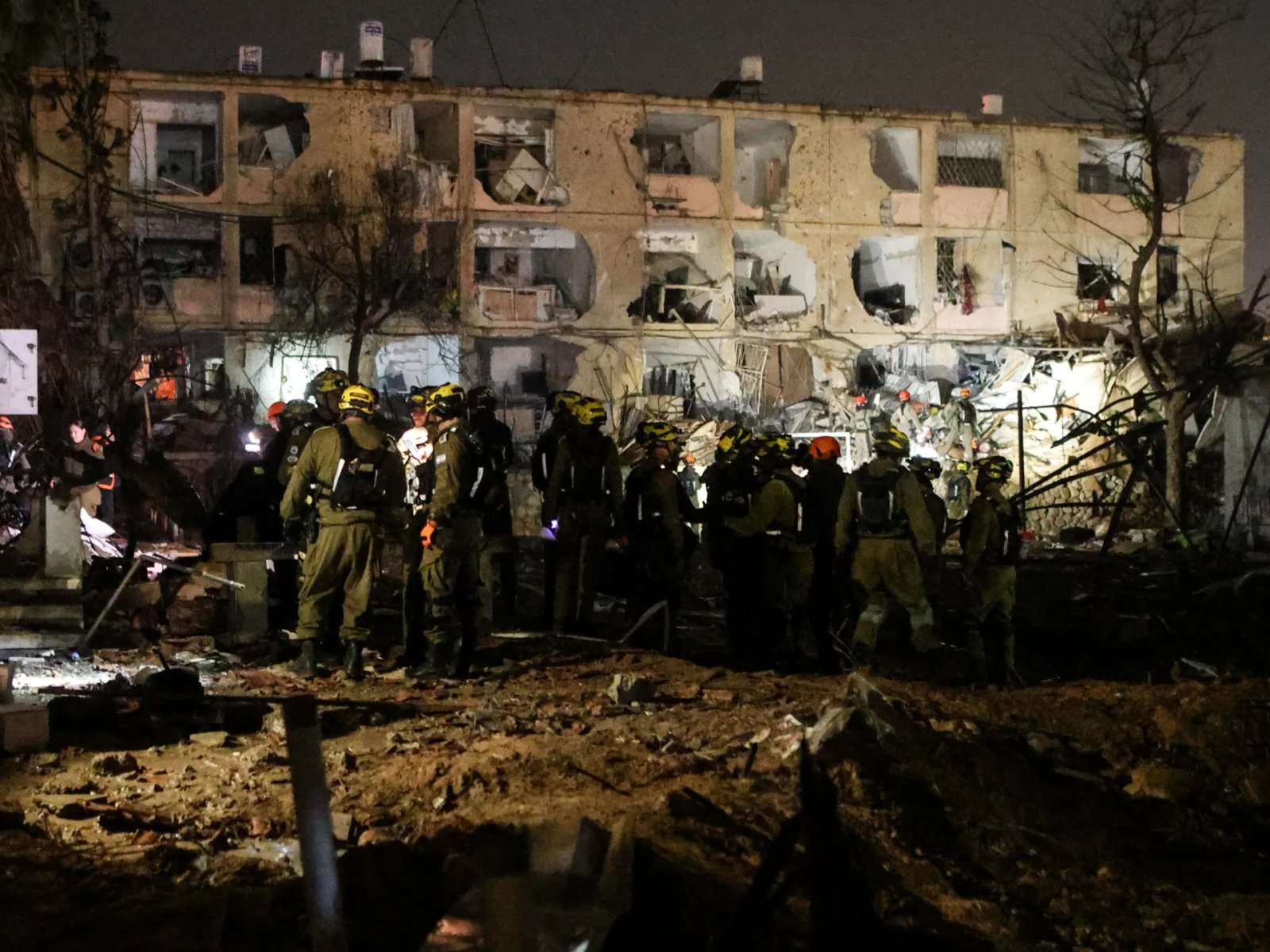
That question matters more today than at any point in recent decades, as the United States and Israel wage a dangerous war on Iran. On Saturday, Iran struck the Israeli city of Dimona which houses a key nuclear facility, demonstrating that it can retaliate for attacks on its own nuclear sites.

Israeli strategic thinking has long been shaped by the fear of an existential threat. Unlike most nuclear states, whose doctrines revolve around deterrence or competition with other nuclear powers, Israel’s security narrative is rooted in the belief that the country could face destruction if a war turns decisively against it. Israeli leaders have repeatedly framed regional conflicts — from the wars of 1967 and 1973 to present confrontations with Iran and armed groups in Gaza and Lebanon — as struggles for national survival. That mindset matters enormously when nuclear weapons are involved.

In most nuclear doctrines, the threshold for nuclear use is deliberately set extraordinarily high. Nuclear weapons exist primarily to deter other nuclear powers. Israel’s strategic thinking introduces a different variable: the possibility that nuclear weapons could be considered if the state believes its survival is in jeopardy due a threat from a non-nuclear state.

Strategic literature has long discussed what is sometimes referred to as the “Samson Option” — the idea that Israel could resort to nuclear weapons if faced with defeat. Whether or not such a doctrine formally exists, the logic behind it is clear. If a state genuinely believes its existence is threatened, the pressure to escalate dramatically becomes far greater.

That concern becomes even more significant when viewed against Israel’s current regional posture. Israel is engaged in a widening network of conflicts and confrontations across the Middle East — from Gaza to Lebanon, Syria and Iran. The possibility of wars unfolding across multiple fronts is no longer theoretical.

This creates a rare situation in global security: a nuclear-armed state whose capabilities and doctrine remain largely shielded from international scrutiny. While the world has spent decades focusing on preventing nuclear proliferation elsewhere in the Middle East, the region’s only existing nuclear arsenal has remained largely beyond debate.

Recent events in Gaza also raise difficult questions about escalation thresholds. Since October 2023, Israel’s military campaign in Gaza has resulted in the killing of tens of thousands of Palestinians and the near-total destruction of much of the territory’s infrastructure. Entire neighbourhoods have been flattened. Hospitals, schools and civilian infrastructure have repeatedly been struck. The scale of destruction has led many human rights organisations and legal scholars to describe the campaign as genocidal.

The intensity of the bombardment has been extraordinary. Some military analysts estimate that the explosive power dropped on Gaza during the early stages of the war alone amounted to several times the explosive yield of the Hiroshima atomic bomb.

The comparison does not suggest equivalence between nuclear and conventional weapons. The devastation of a nuclear detonation would be vastly greater. But it does reveal something important about the scale of force Israeli leaders have been willing to deploy when they believe national security is at stake. If a state is willing to unleash such overwhelming destruction through conventional means, the uncomfortable question arises: what would its threshold be if it believed it was actually losing a war?

Another factor rarely discussed in strategic debates is the political climate within Israel itself. The current Israeli government is widely described as the most hardline in the country’s history, with ministers who openly advocate extreme positions regarding Palestinians and regional adversaries.

At the same time, Israeli society has undergone significant political shifts in recent years, with growing support for more nationalist and militarised policies. That makes the threshold of what could be perceived as an “existential threat” even lower.

All of this should worry the rest of the nuclear states and the international institutions tasked with averting a nuclear Armageddon. And in the context of the ongoing US-Israeli war with Iran, it should spring them into action.


Share21Tweet13Send

Related Posts

The crisis is Sudan is much worse than what is acknowledged
Middle East

The crisis is Sudan is much worse than what is acknowledged

May 12, 2026
The crisis is Sudan is much worse than what is acknowledged
International

The crisis is Sudan is much worse than what is acknowledged

May 12, 2026
The Global Sumud Flotilla is sailing on, here is why
Middle East

The Global Sumud Flotilla is sailing on, here is why

May 11, 2026
The Global Sumud Flotilla is sailing on, here is why
International

The Global Sumud Flotilla is sailing on, here is why

May 11, 2026
Things are not going so well for Russia
International

Things are not going so well for Russia

May 11, 2026
The war on Iran will likely end in American retreat
Middle East

The war on Iran will likely end in American retreat

May 9, 2026
Load More
  • Kingdom’s Elite Belt crowns 20 champions as Riyadh hosts thrilling boxing finale

    Kingdom’s Elite Belt crowns 20 champions as Riyadh hosts thrilling boxing finale

    54 shares
    Share 22 Tweet 14
  • CAF is failing Africa’s World Cup fans

    53 shares
    Share 21 Tweet 13
  • The anti-Semitism smear that ruined Corbyn’s Labour now targets the Greens

    53 shares
    Share 21 Tweet 13
  • UAE announces decision to withdraw from Opec, Opec+ from May 1

    54 shares
    Share 22 Tweet 14
  • Lessons from the war: A call for strategic reckoning in West Asia

    53 shares
    Share 21 Tweet 13
  • Lessons from the war: A call for strategic reckoning in West Asia

    53 shares
    Share 21 Tweet 13
  • Winning peace in Lebanon is harder than winning war

    53 shares
    Share 21 Tweet 13
  • The disaster unfolding on Russia’s Black Sea coast is of its own making

    53 shares
    Share 21 Tweet 13
  • States should tax windfall oil profits to fund their way out of crisis

    53 shares
    Share 21 Tweet 13
  • Your daily horoscope: May 7, 2026

    53 shares
    Share 21 Tweet 13
United Arab Emirates Dirham Exchange Rate


About Dubai News TV

Dubai News is an English language news and current affairs digital TV channel established to provide round-the-clock news, information, and knowledge about local, regional, and international events. It covers a wide range of topics, including politics, business, technology, culture, and sports, ensuring viewers stay informed and engaged with the latest developments. The channel aims to deliver accurate, unbiased reporting and insightful analysis, catering to a diverse audience with a global perspective.

Categories

  • Abu Dhabi (43)
  • Afghanistan (32)
  • Africa (29)
  • Ajman (5)
  • Artificial Intelligence (5)
  • Asia (82)
  • Bangladesh (87)
  • Business and Economy (773)
  • Cricket (11)
  • Donald Trump (6)
  • Dubai (162)
  • EDITOR'S CHOICE (10)
  • Education (29)
  • Entertainment (1,943)
  • ENVIRONMENT (13)
  • Europe (91)
  • EXCLUSIVE (4)
  • FEATURED (41)
  • Featured Stories (40)
  • Global Business (2,259)
  • Gold & Forex (1)
  • Healthcare (9)
  • heath (10)
  • Horoscope (692)
  • Hospitality (1)
  • India (177)
  • International (8,661)
  • Iran (27)
  • Israel (18)
  • Israel-Palestine conflict (76)
  • Life Style (1)
  • Lifestyle (1,372)
    • Health (8)
  • Local Business (1,636)
  • Markets (14)
  • MENA (818)
  • Military & Defense (8)
  • News (11,519)
    • Business (2,169)
    • Politics (13)
    • World (8,731)
      • Foods (1)
      • Games (2)
      • Travel (6)
  • Opinion (26)
  • Outreach Initiatives (1)
  • Pakistan (287)
  • Personal Finance (7)
  • Philippine (11)
  • Philippines (7)
  • PR (157)
  • REAL ESTATE (170)
  • REGION (4,265)
    • GCC (210)
    • Middle East (3,333)
  • Road To Financial Freedom (7)
  • Russia (28)
  • Russia-Ukraine war (73)
  • Saudi Arabia (16)
  • Sharjah (12)
  • South Asia (91)
  • Sports (1,232)
  • Sri Lanka (45)
  • Startup (7)
  • Syria (7)
  • Tech (500)
  • Technology (491)
  • The Big Read (6)
  • Top News (24,862)
  • turkey (9)
  • TV Shows (7)
  • UAE (6,867)
  • Uncategorized (10)
  • Video Posts (11)
  • Viewpoint (8)

Latest News

The crisis is Sudan is much worse than what is acknowledged
Middle East

The crisis is Sudan is much worse than what is acknowledged

by News Desk
May 12, 2026
0

Even in Khartoum, where there is no longer fighting, the humanitarian situation is dire.I recently visited Khartoum for the first...

Read moreDetails
The crisis is Sudan is much worse than what is acknowledged

The crisis is Sudan is much worse than what is acknowledged

May 12, 2026
Your daily horoscope: May 11, 2026

Your daily horoscope: May 11, 2026

May 11, 2026
  • About
  • Advertise
  • Privacy & Policy
  • Contact Us

© 2024 Dubai News TV - Powerd by Global Biz International.

No Result
View All Result
  • Top News
  • UAE
  • Dubai
  • World
  • Business
  • GOLD/FOREX
  • REGION
    • South Asia
      • Pakistan
      • India
    • GCC
    • Middle East
  • REAL ESTATE
  • FEATURED
    • Featured Stories
  • EDITOR’S CHOICE
    • The Big Read
    • Viewpoint
  • ENVIRONMENT
  • Road To Financial Freedom
  • Health
  • Sports

© 2024 Dubai News TV - Powerd by Global Biz International.

This website uses cookies. By continuing to use this website you are giving consent to cookies being used. Visit our Privacy and Cookie Policy.