When the United States and Israel launched their illegal war on Iran on February 28, they called on the Iranian people to rise up. They then proceeded to bomb not just military targets, but civilian housing, universities, schools, hospitals, commercial buildings and historical sites.
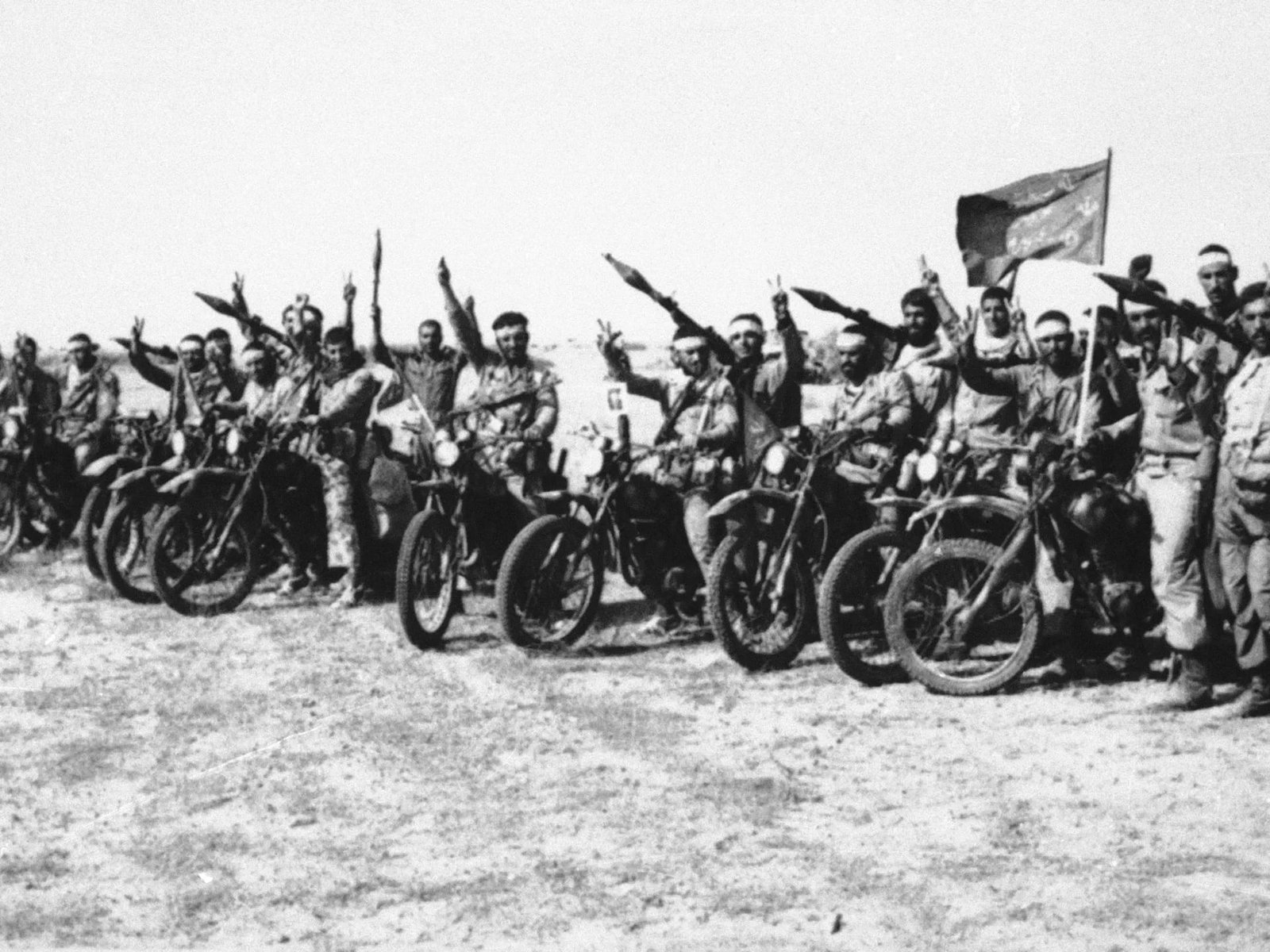
In the sound of explosions today, many Iranians hear echoes from the past: from the Iran-Iraq war of 1980-1988.
In the fall of 1980, when Iraq invaded Iran, I was a 20-year-old student at Tehran Polytechnic University and a member of an opposition group. The first time I saw the impact of war firsthand was in October of that year. One evening, my friend Farhad and I were standing in line to load two boxes of antigovernment pamphlets onto a bus heading to Isfahan; given the restriction of movement and the checkpoints set up by the Revolutionary Guard, this was the only safe way to transport such materials.
Suddenly, the thunderous shots of air defence systems shook the ground and lit the sky with blue, orange, yellow, and red rays of light. The sirens went off. I had never felt so fearful, helpless, and disoriented. Running around to find a possible shelter, the ground shaking under my feet, the smashing booms of unremitting air defence, and multidirectional screams of a terrorised crowd closed off all space to think what exactly was happening.
Once the air defence ceased, Farhad and I jumped on his motorcycle and rode back to our own neighbourhood. My mother had been convinced that I was killed.
The second time I experienced the war directly came a few weeks later. Another friend and I were sitting on a bench in a park in central Tehran, discussing how to simultaneously protest the war and mobilise against the regime.
Suddenly, an Iraqi fighter jet showed up, flying at such a low altitude that we could actually see the pilot. As people began running in fear, the Iraqi bomber circled around us and dropped leaflets in Persian asking Iranians to rise up against their government. That was the only possible way that Iranians could stop the war: “Topple your own government.” We both thought that Saddam Hussein was hijacking our struggle. We were under no illusion that the Iraqis could somehow turn into our liberators.
At the time, there were heated conversations within the opposition groups on whether those of us who found ourselves in opposition to the Islamic Republic should participate in defending the country against the Iraqi aggression, or we should exploit the war and advance our own anti-regime agenda. I belonged to the second group, taking advantage of the war to topple the state.
The government at that time was barely a year old, but it enjoyed vast popular support. The very notion that halting the bombing of the cities was contingent upon the masses overthrowing the state was nothing more than a delusional fantasy. Saddam Hussein learned very quickly that despite the chaotic conditions of the postrevolutionary state, the Islamic Republic could mobilise millions to defend the country and hold on to political power.



 United Arab Emirates Dirham Exchange Rate