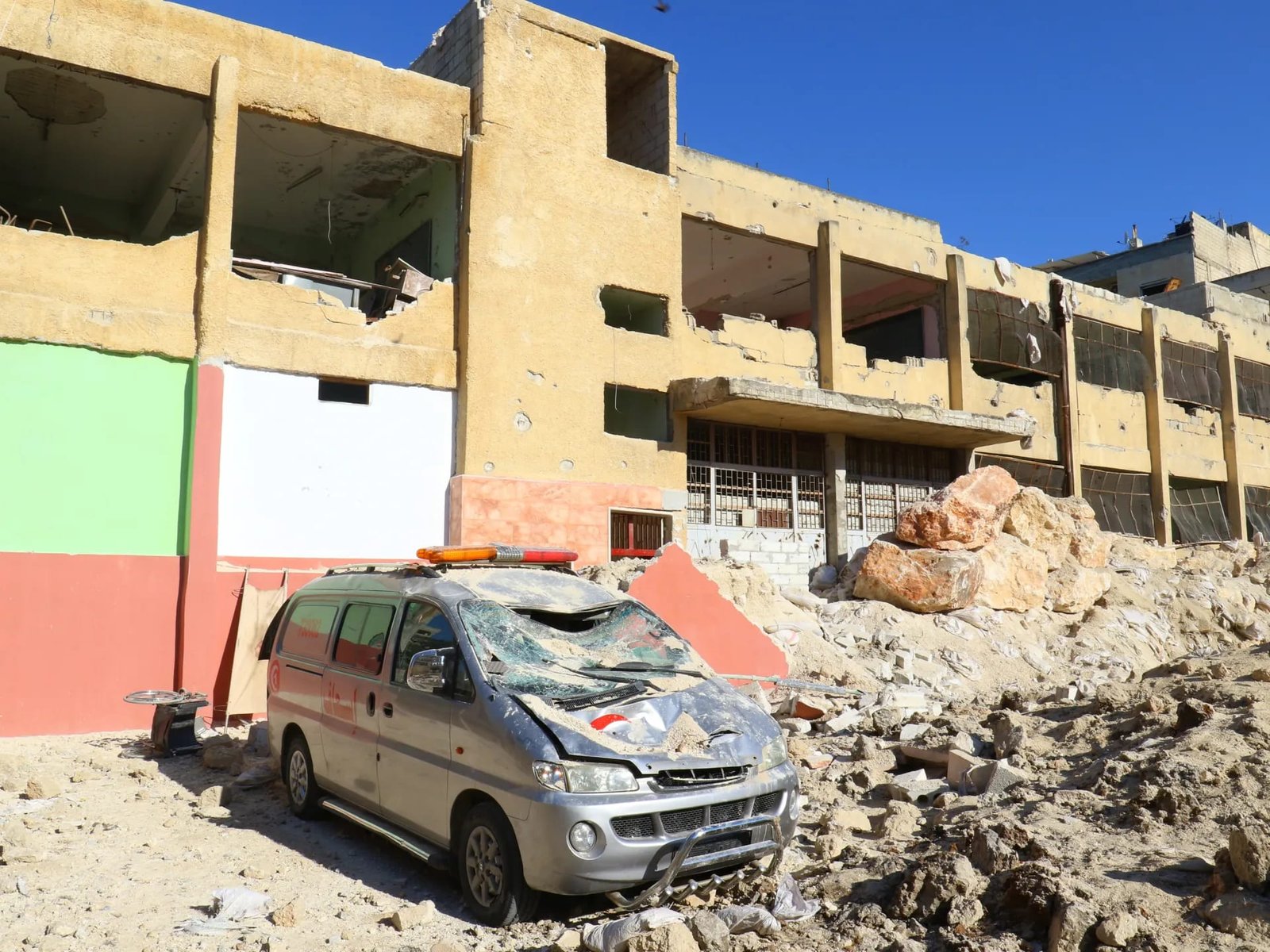
Last week, European Union and Syrian officials met in Brussels for high-level talks on the country’s reconstruction. The EU’s support for Syria’s health system, including 14 million euros ($16.25m) to rehabilitate Ar-Rastan Hospital in Homs, is a significant contribution that merits recognition.
While the EU is demonstrating what strategic investment can achieve, the gap between the conditions returnees face and what they need for a healthy life remains a major barrier for the country’s recovery. After 14 years of conflict, Syria is facing a public health crisis that no government can address on its own.
The restoration of health services will instead require large-scale, coordinated action from across the international community.
A recent report authored by my organisation, Relief International, details the crisis at hand: many of the 3.7 million Syrians who have returned home are encountering a health system left fractured and struggling after years of devastation. According to our findings, 78 percent of returnees in Deir Az Zor reported that healthcare was unavailable. In al-Tebni district, 41 percent of surveyed households said at least one family member had been unable to access emergency care in the previous six months. From shortages of staff and equipment to long wait times, communities are facing obstacles to care with life-or-death consequences.
Across the 50 healthcare facilities Relief International supports, our teams are seeing the consequences every day. Children arriving with acute malnutrition that should have been identified months earlier and adults with chronic conditions such as diabetes and hypertension are going without medication. Pregnant women and their babies are being put at risk without critical antenatal support and skilled obstetric care during birth.
We also hear from people who have stopped seeking care altogether; they no longer trust that quality services exist, are worth the journey, or can be relied on. For many, whatever care is available is simply unaffordable.
Families like Aref’s in al-Tebni are still waiting for healthcare to be restored. When Aref went back to his hometown months ago, he found the local health centre closed: its gates locked, its staff long gone, and its pharmacy empty of the asthma medication he needed. For a family that had already endured years of insecurity, it was especially painful to find that while home remained, healthcare did not.
Relief International teams also see the hidden wounds this war has left across Syrian society. Our report found that 86 percent of women surveyed were experiencing anxiety and psychological distress, driven by exposure to conflict and the uncertainty of displacement. Anxiety, grief, and trauma are widespread, yet mental health and psychosocial support remain severely underfunded and understaffed.
These challenges affect every aspect of Syria’s recovery. How can Syria know peace when its people have no peace of mind?






 United Arab Emirates Dirham Exchange Rate