
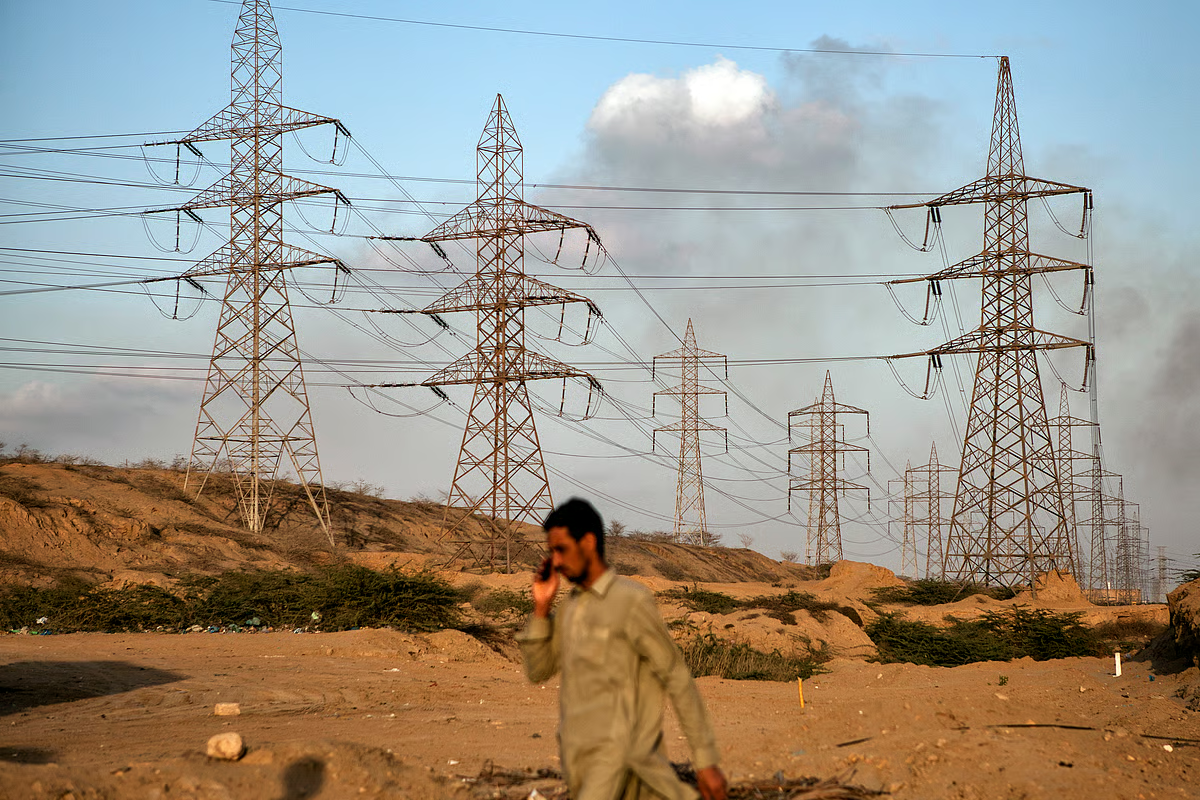
The funding aims to upgrade the country’s aging transmission infrastructure, reduce energy losses, and facilitate the flow of clean hydropower to major urban centers, addressing chronic outages and a mounting circular debt crisis.
ISLAMABAD – The Asian Development Bank (ADB) has approved a $330 million loan to overhaul Pakistan’s aging and inefficient power transmission network, a move aimed at alleviating chronic electricity shortages and stabilizing the country’s troubled energy sector.
The project specifically targets the country’s critical north-south power corridor, which is essential for transporting electricity from hydropower plants in the north to demand centers in the south. The upgrade is expected to enable the transfer of an additional 3,200 megawatts (MW) of clean energy, reducing reliance on expensive imported fuels.
“This project represents ADB’s strong partnership with Pakistan and our shared commitment to accelerate clean energy transition,” said ADB’s Country Director for Pakistan, Emma Fan. The bank stated the investment will “help reduce reliance on imported fuels, improve energy security, and support Pakistan’s transition to a more affordable and sustainable energy mix.”
Addressing Systemic Challenges
Pakistan’s power sector is plagued by systemic issues, including significant technical losses during transmission, widespread power theft, and a crippling circular debt that has ballooned to 1.7 trillion rupees ($5.9 billion). These problems contribute to frequent power outages and soaring electricity costs for consumers and businesses alike.
The ADB loan will finance the construction of new grid stations and transmission lines, addressing long-standing bottlenecks. This is the latest in a series of financial injections from the Manilla-based lender, which also provided a $250 million loan for transmission expansion in November 2023 and a $410 million package for the Reko Diq mine in August.
The investment comes at a critical time for Pakistan, which relies heavily on external financing to stabilize its economy. The country narrowly avoided a default last year following a $7 billion bailout package from the International Monetary Fund (IMF).





 United Arab Emirates Dirham Exchange Rate