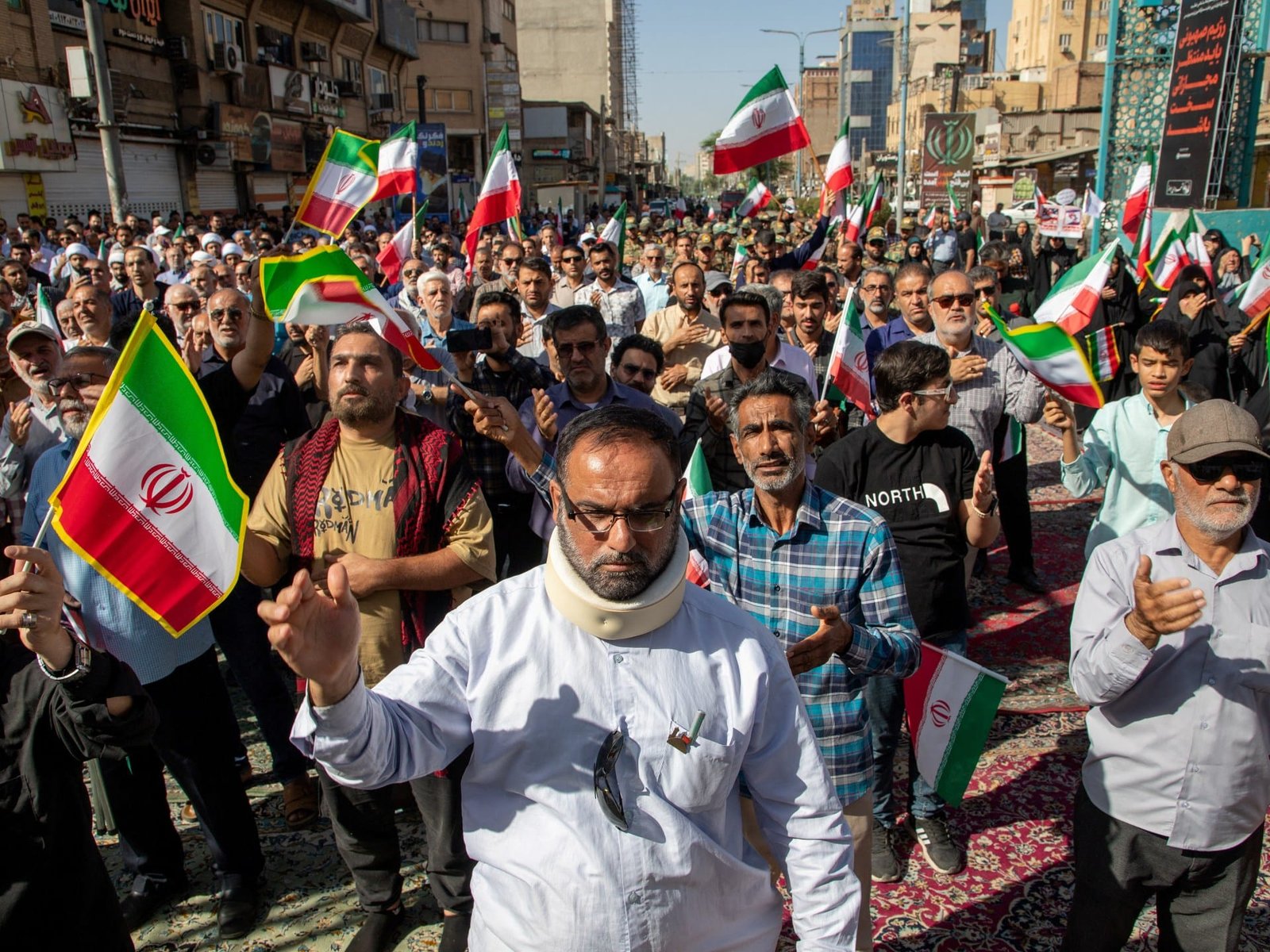
Iran has few options to end the war, and escalating against Israel and the US will likely invite more attacks.
Iran has no clear off-ramps to end its war with Israel, which could soon drag in the United States and lead to a new quagmire in the Middle East, analysts told media.
Since June 13, Israel has killed at least 240 Iranians, many of them civilians. Top Iranian military leaders and nuclear scientists have been among the dead.
Israel has struck Iran’s state television station, hit a hospital, targeted apartment blocks, and damaged the country’s air defences.
In response, Iran has fired barrages of ballistic missiles at Israel, targeting military and security installations, and hitting the Haifa oil refinery, residential buildings, and a hospital. At least 24 people have been killed in Israel as a result of the attacks.
Israel aims to destroy Iran’s nuclear programme and potentially go as far as bringing about regime change, analysts say.
These goals make it difficult for Iran to navigate a quick end to the conflict. Iran’s official position is that it will not negotiate while under attack, fearing it will be forced to fully surrender to US and Israeli terms.
Iran may instead have to hope that US President Donald Trump can be persuaded to rein in Israel, which may be in his interest to avoid getting entangled in a far-away war, even if the US leader has recently appeared to favour striking Iran, and has reiterated that Iran cannot be allowed to have a nuclear weapon.
“If the United States recognises the urgency of de-escalation and manages to persuade Israel to halt its military campaign, then – given the mounting costs of war for Iran and the fact that Iran’s primary goal is to stop, not expand, the conflict – it is highly likely that Iran would agree to a ceasefire or political resolution,” said Hamidreza Aziz, an expert on Iran for the Middle East Council for Global Affairs think tank.
In theory, Iran could return to the negotiating table and sign a deal while under fire.
However, Iran would be forced to entirely give up its nuclear programme, enabling its enemies to then aggressively pursue regime change without fear of consequence, analysts previously told media.
This is an unlikely scenario, according to Reza H Akbari, an analyst on Iran and the Middle East, North Africa and South Asia Program Manager at the Institute for War and Peace Reporting.
“[Iran’s nuclear] program continues to remain a leverage for Iran, which enables them to even engage with the US. Giving it up would be a shocking development which I don’t foresee for the time being,” he told media.
The US and Iran had already engaged in five rounds of negotiations before Israel instigated the conflict.
Few viable options
The two sides had reached an impasse when Trump demanded that Iran give up its entire nuclear programme, which every country has an “inalienable right” to use for peaceful purposes, according to the Treaty on the Non-Proliferation of Nuclear Weapons, which Iran is a signatory to.
Trump has since warned Iran to quickly surrender to a deal or face even more dire repercussions, hinting at regime change.
“If Iran does not retaliate after each attack, [Iranian officials] think [the Israeli attacks] will get harder and I think they’re correct,” Mortazavi told media. “But every time [Iran] retaliates, they give Israel the excuse to attack them again.”
Over the last year, Iran’s regional influence has suffered major setbacks, leaving it geopolitically vulnerable.
Iran had long relied on its ally, the Lebanese armed group Hezbollah, to provide deterrence from direct Israeli attacks, but Hezbollah was significantly weakened after fighting an all-out war against Israel last year.
In addition, Iran lost another ally when Syria’s former President Bashar al-Assad was toppled in December 2024.
Iran could still direct attacks against US bases and personnel through a web of Iranian-backed armed groups in the region, particularly in Iraq, said Barbara Slavin, an expert on Iran and a distinguished fellow at the Stimson Centre think tank.
She believes Iranian-backed groups in Iraq could fire “warning shots” to try and exploit US public opinion.
Trump’s nationalist “America First” base remains staunchly opposed to any US involvement in wars abroad, which they view as unrelated to their domestic concerns.
And anti-interventionist sentiments are likely to increase if US troops are put in harm’s way as a result of any attacks related to the conflict with Iran.
“The thought of Americans dying in this would make it even more controversial for [the US] than it already is,” Slavin told media.

 United Arab Emirates Dirham Exchange Rate