
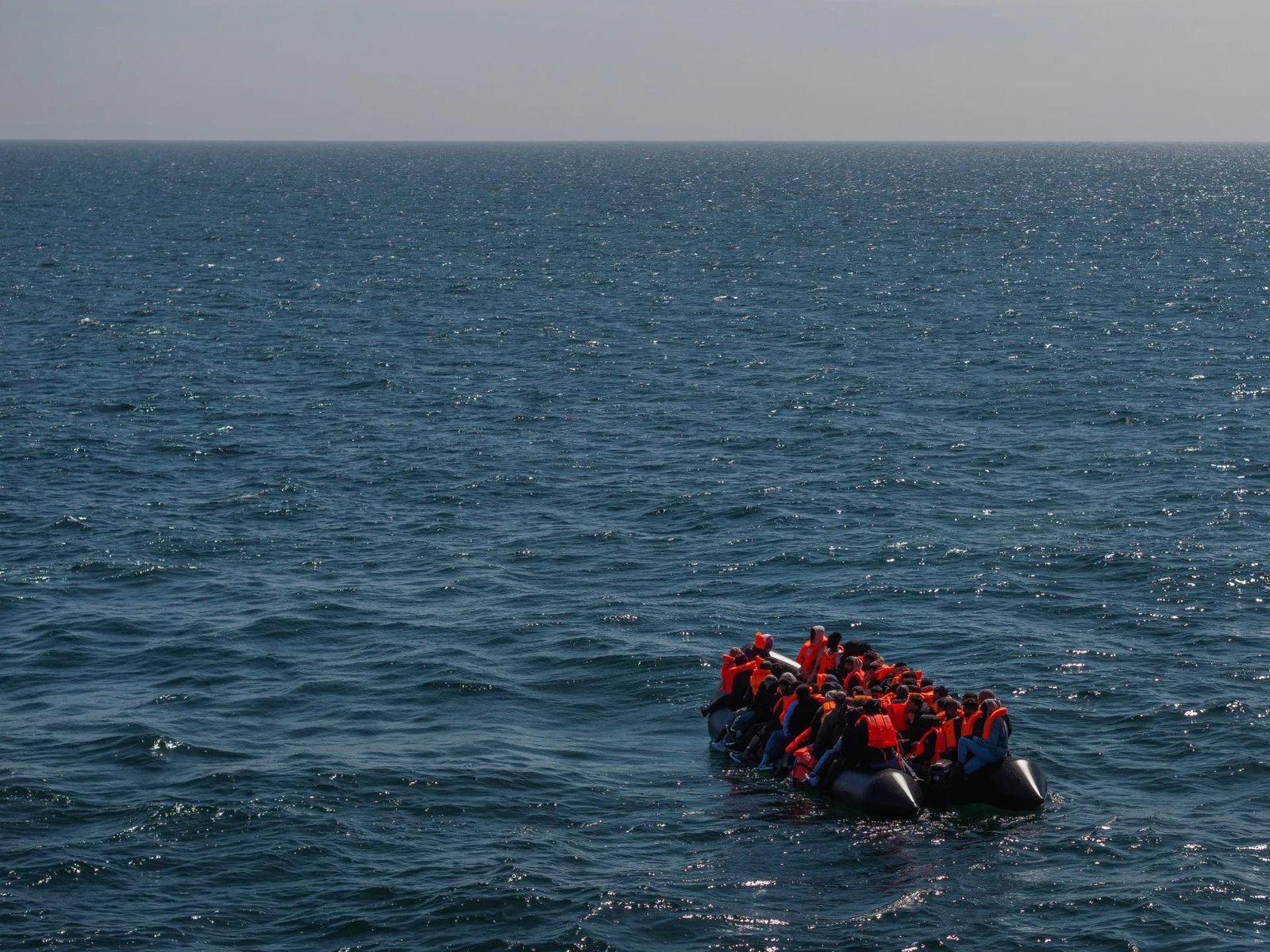
As governments gather in New York for the second International Migration Review Forum (IMRF) to assess progress on global migration commitments, a central question looms: is the Global Compact for Migration improving conditions for people on the move?
The answer is yes.
Adopted in 2018, the Global Compact for Safe, Orderly and Regular Migration is the first international agreement aimed at making migration safer and more humane through cooperation. For the Middle East and North Africa, the International Organization for Migration’s Global Overview of Migration Routes (2025), which tracks migration patterns, risks and deaths along major routes worldwide, offers a mixed picture. Some routes are shifting, but the risks people face remain severe, and in some cases are worsening.
Across the Mediterranean, arrival numbers alone can be misleading. In 2025, just more than 66,500 people reached Italy and Malta via the Central Mediterranean Route, almost identical to the year before. Arrivals to Greece, Cyprus and Bulgaria along the Eastern Mediterranean Route fell by about 30 percent, while the Western Mediterranean Route saw a modest rise. The Western African Atlantic Route to the Canary Islands recorded a dramatic 62 percent drop.
Taken in isolation, these figures might suggest reduced pressure on Europe’s borders. But lower arrivals do not automatically mean safer journeys. On the Eastern Mediterranean Route, deaths and disappearances nearly doubled in a single year. On the Western African Atlantic Route, deaths barely declined despite the steep drop in arrivals – meaning the probability of dying at sea increased. And on the Central Mediterranean Route, more than 1,300 people are known to have died in 2025, keeping it among the world’s deadliest migration corridors.
These trends reflect a broader reality: When border controls tighten or routes shift, journeys often become longer, more fragmented and more dangerous. People continue to move, but with fewer options, many are pushed towards irregular and high‑risk pathways.
Sudan illustrates how crises can reshape mobility across an entire region. Three years after the conflict erupted in April 2023, Sudan has become the world’s largest displacement crisis. At the peak, the number of internally displaced people more than tripled, reaching more than 11.5 million. Nearly 4 million people have returned home – often to damaged or partially destroyed housing – but almost 9 million remain displaced. Against this backdrop, it is not surprising that more Sudanese nationals are appearing along both Eastern and Central Mediterranean routes. For many, these journeys are not a first choice but a last resort, when options in Sudan and neighbouring countries are constrained.
The MENA region is also deeply connected to global mobility patterns. Movements from Asia and the Pacific to Europe increased significantly in 2025, with nearly one in three irregular arrivals originating from that region. Many of these journeys intersect with North Africa and the Eastern Mediterranean. A visa policy change in one country, a conflict flare‑up in another, or a new enforcement measure along a corridor can reshape risks across thousands of kilometres.
Meanwhile, the underlying pressures driving mobility in and around MENA are not easing. The region has one of the world’s youngest populations, with youth unemployment often exceeding 20 percent. Climate‑related shocks – droughts, floods, heatwaves – are increasingly interacting with conflict and economic stress. These factors rarely operate in isolation; they compound one another, shaping both internal displacement and cross‑border movement.
What does this mean for policy? Several priorities stand out.







 United Arab Emirates Dirham Exchange Rate