
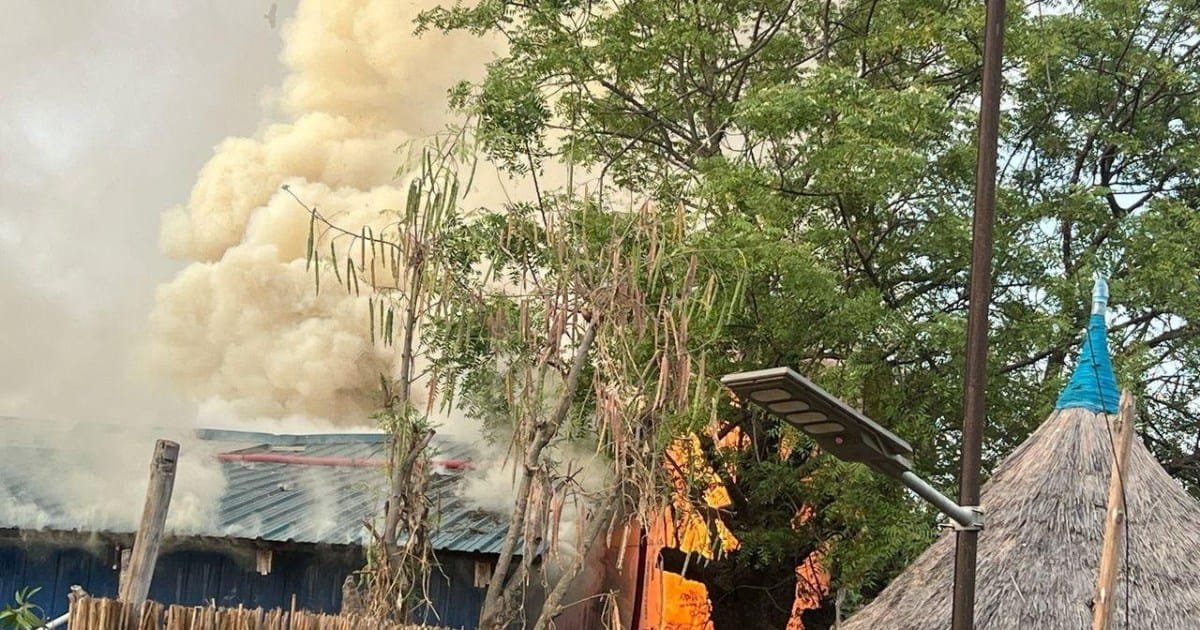
In 2015, as a civil war was raging in South Sudan, the United Nations Security Council imposed the first set of sanctions on the country, including asset freezes and travel bans on various senior officials. Three years later, after a ceasefire agreement was repeatedly violated, the UNSC mustered the votes to impose a full arms embargo. Fragile peace eventually settled in, but the embargo was kept in place and was extended every year.
The review of the embargo is now coming up on May 29 and there is a push from African members of the UNSC – Sierra Leone, Somalia and Algeria – to lift it. On March 18, the African Union Peace and Security Council (AUPSC) publicly called for this measure to end.
But lifting the embargo on South Sudan at this moment would be a mistake. Violence has come back to plague the country, killing at least 180 people between March and mid-April, amid deepening divisions between President Salva Kiir and First Vice President Riek Machar, who has been placed under house arrest.
Allowing more weapons to enter the country would only escalate the dire situation. This would not be in the interest of neighbouring countries and the African Union as a whole.
Under the AU’s development plan, Agenda 2063, the continent set itself an ambitious goal of “Silencing the Guns” by 2020, later extended to 2030. With this, the AU wants to “end all wars and violent conflicts and promote dialogue-based mechanisms for conflict prevention and resolution”.
Yet, the AUPSC’s call for lifting the embargo on South Sudan does not fall in line with these goals. The justification for this stance is that free access to more weapons can enable the unification of government and opposition forces and reform the security sector.
But this logic ignores the growing fractures in South Sudan amid the renewed tensions between Kiir and Machar. Placing more guns in the hands of warring parties involved in serious human rights violations and crimes under international law would only make the situation worse.
South Sudan’s security and defence forces have attacked the very people they are tasked to protect: Civilians. The South Sudanese army, National Security Service and armed opposition forces have been implicated in war crimes and human rights violations for well more than a decade, including by the AU’s Commission of Inquiry on South Sudan and the UN Commission on Human Rights in South Sudan.
Indeed, around the time the AUPSC called for the lifting of the arms embargo, South Sudan’s government reportedly used improvised incendiary weapons in aerial attacks, killing at least 58 people and injuring others, including children.

 United Arab Emirates Dirham Exchange Rate