
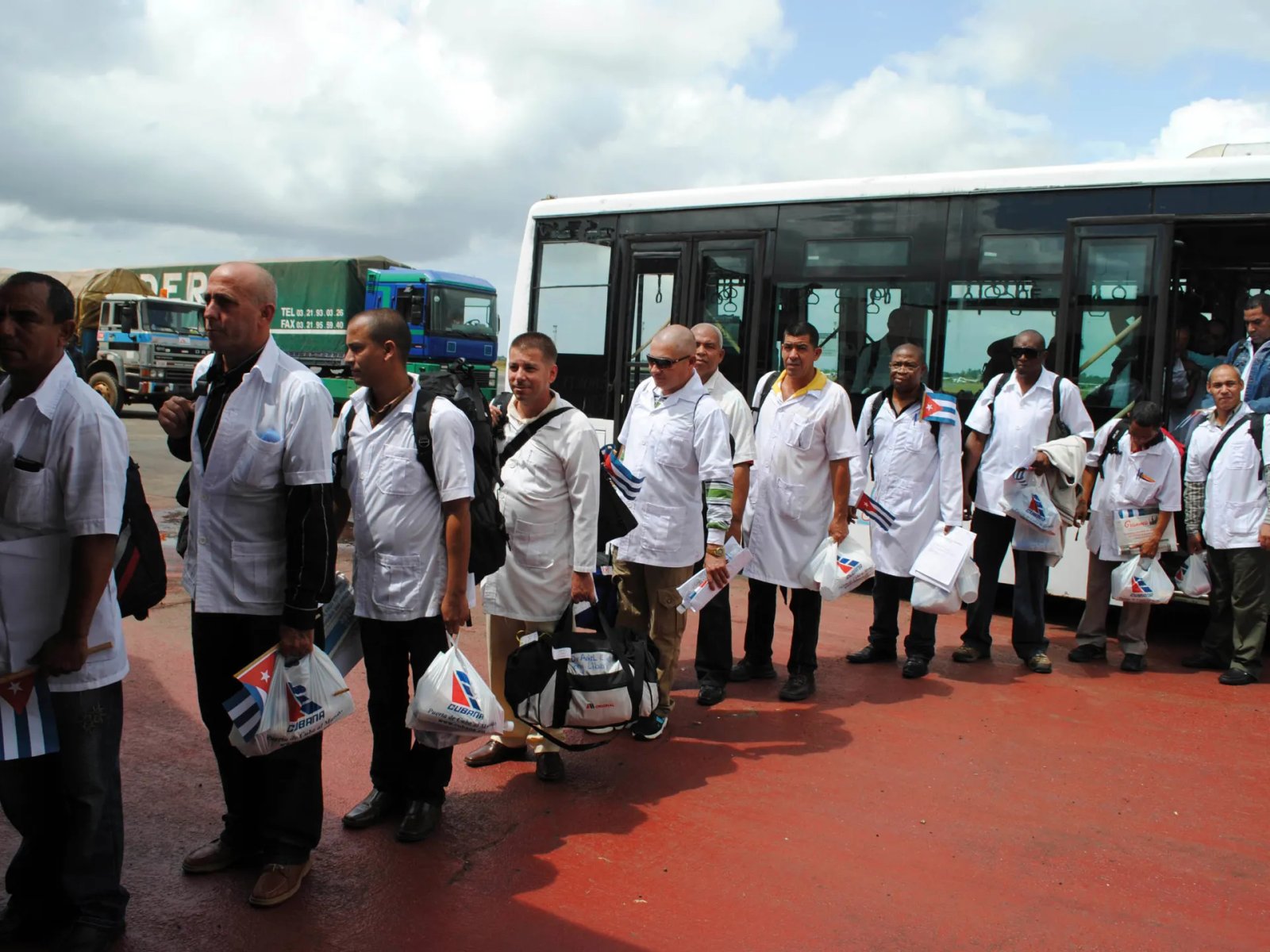
When the lights went out in Cuba last month leaving in the dark 10 million people, American media coverage reflexively reached for its tired old frame: a failed communist state, a dying regime, an opportunity. What that coverage cannot see, because it has not been looking at Cuba the way Cuba has been looking at itself, is what we stand to lose when the logic of possession replaces the logic of solidarity.
Last week, the Russian oil tanker Anatoly Kolodkin, a sanctioned Russian vessel, arrived at the Cuban port of Matanzas. It made the first delivery of oil to the country in three months, unloading 730,000 barrels of crude – enough to satisfy Cuban energy needs for just 10 days. Another Russian tanker headed to Cuba, the Sea Horse, diverted to Venezuela.
The US blockade on Cuba continues, with a US destroyer and other military vessels enforcing it in the Caribbean.
Donald Trump, the president of the United States — who a federal jury found liable for sexual abuse — has announced that he expects to have “the honour” of “taking” Cuba. “Whether I free it, take it — I think I can do anything I want with it,” he said. Characteristically crass and perhaps politically unhinged as this language may seem, Trump merely said the quiet part out loud.
This is the logic of the plantation — and not incidentally, the logic of the rapist. Specifically and historically, this is the logic that the US has applied to Cuba for more than a century: an island 90 miles from Florida that kept finding ways to refuse. Trump now has “the honour” it seems — with the help of his Secretary of State Marco Rubio, who has made this the centre of his own desire — to finally make Cuba submit.
This is the most important thing to understand about how American analysis — official and journalistic — is failing the current crisis: the problem is not information. It is the imperial standpoint that finds Cuba as a bit player to be acted upon, rather than as the protagonist in their own story.
I first arrived in Cuba in the late 1990s, a young anthropologist-in-training steeped in the Latin American studies tradition that what matters in this region is class, not colour. Cuba disabused me of this within days.
Walking the streets of Havana, I was stopped repeatedly by Cuban police who demanded “dame carnet” (give me your ID). My body had placed me, unmistakably, in the category of young Black Cuban male — subject to surveillance. The logic was familiar.
I knew the routine already, from driving in the Deep South and the geography of what I had come to call walking while Black anywhere at home in the US.




 United Arab Emirates Dirham Exchange Rate