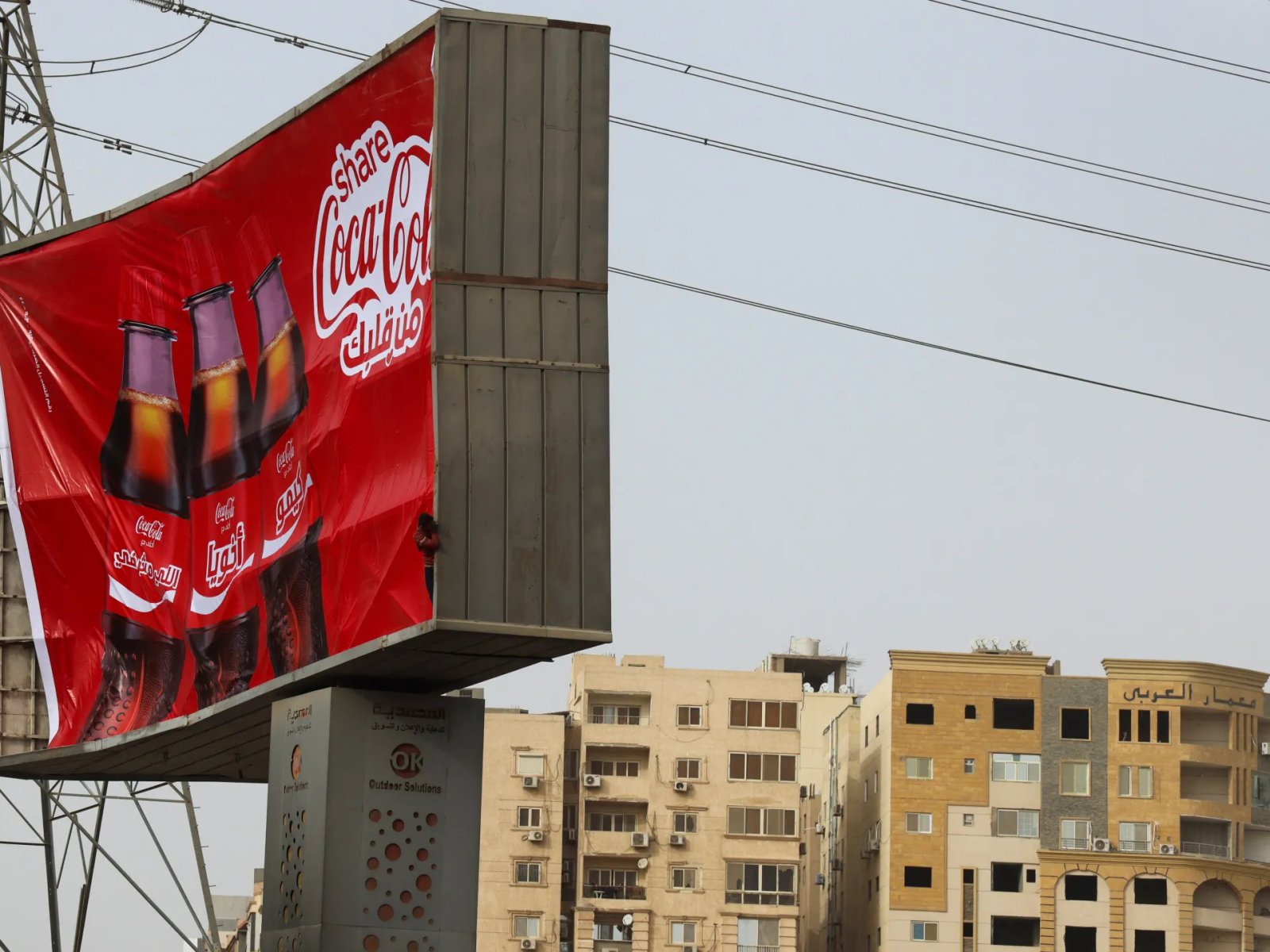
Investments boost Egypt’s economy, but rural poverty highlights unequal benefits from economic recovery efforts.
Egypt found itself back on the international front pages in the second half of this year. The country played host to the Sharm el-Sheikh conference in October when US President Donald Trump rallied global and regional powers alike behind his ceasefire plan for the Gaza Strip. Shortly after, in November, Cairo invited world leaders to attend the spectacular opening of the new Grand Egyptian Museum next to the pyramids.
Amid these eye-catching events, other domestic developments have received less attention. Most notable were Egypt’s parliamentary elections, with the first round held in November, and runoffs planned for early December.
The elections have been dominated by a coalition of pro-government parties running unopposed for the party list seats, which are half of the parliamentary seats being voted for. Individual candidates can run for the other half of the seats in contention, but those seats are difficult to win for candidates without the necessary financial resources and connections.
Critics, therefore, believe that the race is essentially only between loyalists to President Abdel Fattah el-Sisi, with a group of Egyptian human rights groups saying that the elections had occurred “under chronic and severe restrictions on meaningful political participation”.
With that context in mind, the elections have not attracted a groundswell of attention from Egyptians, continuing a pattern since el-Sisi took power in the country more than a decade ago, after a coup against Egypt’s first democratically elected president, Mohammed Morsi.
“They are even less important than under [former President Hosni] Mubarak, it is not the talk of the day,” said a businessman in the textile industry, who did not wish to give their full name for fear of reprisals. “There are fewer banners and posters than during previous elections.”
Earlier this year, the IMF completed its fourth review of Egypt’s economic reforms as part of conditions attached to its loan, and distributed a further $1.2bn – part of a loan worth $8bn in total, of which Egypt has now withdrawn $3.2bn.
The IMF continues to voice concern about state and military control in the economy – issues that have been on the table continuously under el-Sisi’s rule – but the overall message has been that Egypt is performing as desired. Between the lines, one can read that el-Sisi’s Egypt, especially as the precious peace agreement between Egypt and Israel has held steady amid Israel’s war in Gaza, is simply too big to fail.
The capital injections have had their impact on the ground. There are dollars in the banks and after a major devaluation in 2024, the Egyptian pound is relatively stable. It serves the business community well.
Capital injections
“Our exports rise every quarter,” said a textile company owner. “There are many Turkish textile companies opening in Egypt, drawn by our cheap labour costs.”
That is the intended effect of the devaluation: translated into foreign currency, labour costs decrease, making Egypt an attractive destination to move production that depends on low-skilled labour.
“For the past year or two, exports were ridiculously cheap [due to low labour costs]. We see that advantage slowly fading now. Salaries will get better every year.”
Mohamed Usama, an engineer in a facility manufacturing steel products, has also seen conditions improve. His employer relies on the import of raw materials and export of higher-value products.
“The stable exchange rate made a huge difference,” Usama said. “It made imports and exports reliable. There are no more problems with wiring money; it is predictable when shipments come in. There are dollars available.”
“The waiting time for the arrival of an order of raw materials is now one month instead of three to six,” he added.
That predictability has allowed factories to hire again, according to Usama, even if he pointed out that many contracts were still temporary, leaving workers cautious.
Osama Diab, a Egyptian political economist at the Belgium university KU Leuven, is sceptical that the loans and investment deals have fixed Egypt’s economy. “These mainly treat the symptoms,” he wrote in an email. “I don’t believe that any of the structural issues are resolved. The economy is still dependent on offering high interest rates to generate hard currency, and there are still massive current account imbalances.”
And while business sentiment is generally positive, hardship for many Egyptians appears far from over.
One economic parameter, non-oil private sector activity, has remained in contraction for most of the past five years. One culprit is low domestic consumer demand. That is also something the textile company owner has noticed.
“Purchasing power is not strong; it has not improved yet,” the textile company owner said. “Customers complain about not having money. Not only in textile, but in many sectors.”





 United Arab Emirates Dirham Exchange Rate