
The conclusion many states may now draw is that complying with the NPT is no longer a guarantee of nuclear security.
After launching direct attacks on Iran’s nuclear facilities, United States President Donald Trump was quick to declare victory. His administration claimed “the world is far safer” after the “bombing campaign obliterated Iran’s ability to create nuclear weapons”.
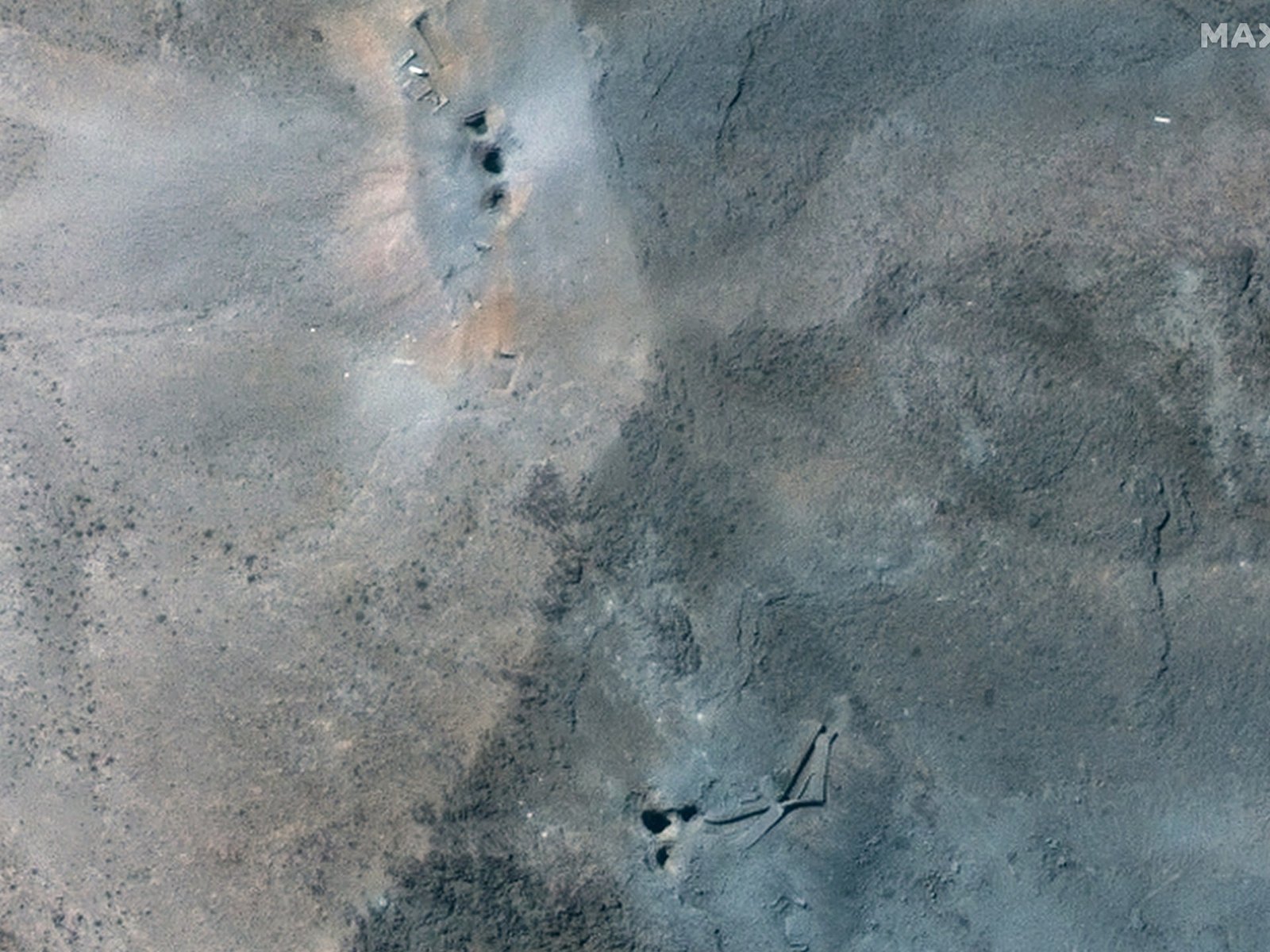
But in the aftermath of the strikes, there has been much deliberation about the extent to which the Iranian nuclear programme was really set back. As the head of the International Atomic Energy Agency (IAEA), Rafael Grossi, pointed out, craters reveal little about what survived deep below layers of concrete. The Trump administration admitted that at least one site was not targeted with bunker-busting bombs because it was too deep underground. The fate of Iran’s centrifuges and stockpile of 60 percent-enriched uranium remains unknown.
While the extent of the damage that the Iranian nuclear programme sustained remains unclear, the nonproliferation regime that kept it transparent for years has been left in tatters.
Instead of curbing nuclear proliferation, this short-sighted military action may well intensify the nuclear threat it sought to contain, making not just the Middle East but also the entire world a far more dangerous place.
Until this month’s attack, Iran’s nuclear programme had remained a largely peaceful one.
It was launched in the 1950s with help from the US Atoms for Peace initiative. Over the following decades, it expanded to include a number of nuclear facilities.
Among them are the Arak heavy water reactor, which is now nonoperational; the Tehran Research Reactor, an installation built with US help in 1967 and used for medical isotope production; the uranium conversion and fuel fabrication complex in Isfahan; the Natanz nuclear facility, which is the country’s main enrichment site; the Fordow underground plant near Qom; and the Bushehr nuclear plant, which relies on Russian-supplied fuel and is the only one currently operational in Iran.
In addition, Iran is constructing two other nuclear installations – the Darkhovin and Sirik power plant projects – but those remain in early stages.
At times, especially after previously secret sites came to light in 2002, the IAEA carried out more intrusive verification measures and pressed Iran to implement the Additional Protocol, an agreement for expanded inspections. The country did so voluntarily from 2003 to 2006.
In 2015, Iran signed the Joint Comprehensive Plan of Action (JCPOA) with the US, United Kingdom, China, Russia, France and Germany. It accepted strict ceilings on uranium enrichment and agreed to reduce its uranium stockpile by 97 percent in exchange for sanctions relief.
The IAEA was granted even greater access to Iran’s programme than before and was allowed to install cameras and remote sensors at nuclear sites, permitting real-time monitoring. This expanded access covered all the major sites of Iran’s nuclear programme, including Natanz, Fordow and Isfahan, the three facilities recently attacked by the US. The JCPOA proved highly effective while it remained in force.
In 2018 during his first term as president, Trump decided to pull out of the JCPOA, claiming that under its provisions Iran received “too much in exchange for too little”. Despite repeated pleas from European allies to preserve the accord, the US reimposed sanctions and launched a “maximum pressure” campaign to cripple Iran’s economy.
The consequences of Trump’s withdrawal were swift. Deprived of the deal’s benefits, Iran began reducing its compliance with the agreement. In 2020, after a Trump-ordered air strike killed Iranian General Qassem Soleimani, Tehran announced it would no longer be bound by any operational limits in the nuclear deal.
A well-surveilled nuclear programme
Unsurprisingly, Trump’s actions made any new negotiations with Iran far more difficult. US officials under the second Trump administration tried to restart talks with Iran and conducted several rounds of indirect discussions.
Iranian leaders demanded guarantees that a new deal would not be undermined or sanctions reimposed again unilaterally, and in response, Washington showed little flexibility, instead making even more stringent demands.
In the days after the bombing, Iran’s parliament started drafting legislation to quit the NPT. If Iran goes through with it, a withdrawal could rupture the cornerstone treaty of global arms control.
For half a century, the NPT has limited the nuclear bomb to a handful of states. Iran quitting now would mark the treaty’s most consequential breach since North Korea, which walked away from the NPT in 2003 and tested a nuclear weapon four years later.
Outside the NPT, Iran would no longer be bound by any limits or inspections, leaving the world in the dark about its activities. An opaque Iranian nuclear programme would likely spur other regional powers to do the same, shredding decades of restraint.
Leaving the NPT is not meant to be easy. It requires three months notice, a public rationale, continued liability for past violations, and the handover or continuous safeguarding of all imported nuclear technology. These are steps the treaty depositories and the United Nations Security Council could use to pressure any would-be quitter back to the table, assuming the quitter still sees any value in remaining at the table.
While Iran has not yet declared it is leaving the NPT, its parliament passed legislation to stop all cooperation with the IAEA. This is a clear sign that the prospects of Iran’s continued adherence to multilateral diplomacy are dim.
By bombing facilities under active IAEA safeguards, the US in effect told every nonnuclear state that cooperation buys little safety.
The strikes set a dangerous precedent: A country that opened its sites to inspectors and remained within a negotiated framework nevertheless faced military force. If states conclude that adhering to the NPT and allowing inspections won’t protect them from attack or coercion, they may well decide that developing a nuclear deterrent is the only reliable security guarantee. After all, we don’t see the US contemplating strikes on North Korean nuclear facilities after it made clear it has a nuclear weapon.
Whatever temporary setback this ill-conceived show of force was meant to achieve, it now risks causing a strategic unravelling of the wider nonproliferation regime and regional stability.
The US still has a chance to stop a nuclear arms race from erupting in the Middle East and the rest of the world. To do that, it must double down on diplomacy and confront the deep distrust it created head-on.
Striking a deal is essential, but for that, American diplomacy must return to realism in negotiations. Washington should abandon the maximalist demand of “zero enrichment”. Arms control experts noted that insisting Iran have no enrichment capability is unnecessary for nonproliferation and also unrealistic. The JCPOA already proved that a tightly limited enrichment programme paired with rigorous monitoring can effectively block Iran’s pathways to a bomb. The US needs to signal it is willing to accept such an arrangement in exchange for security assurances and sanctions relief.
For its part, Tehran has signalled its willingness to ship out its stockpile of highly enriched uranium and cap enrichment levels again if offered a fair deal, even though it refuses to relinquish its right to enrich entirely.

 United Arab Emirates Dirham Exchange Rate